
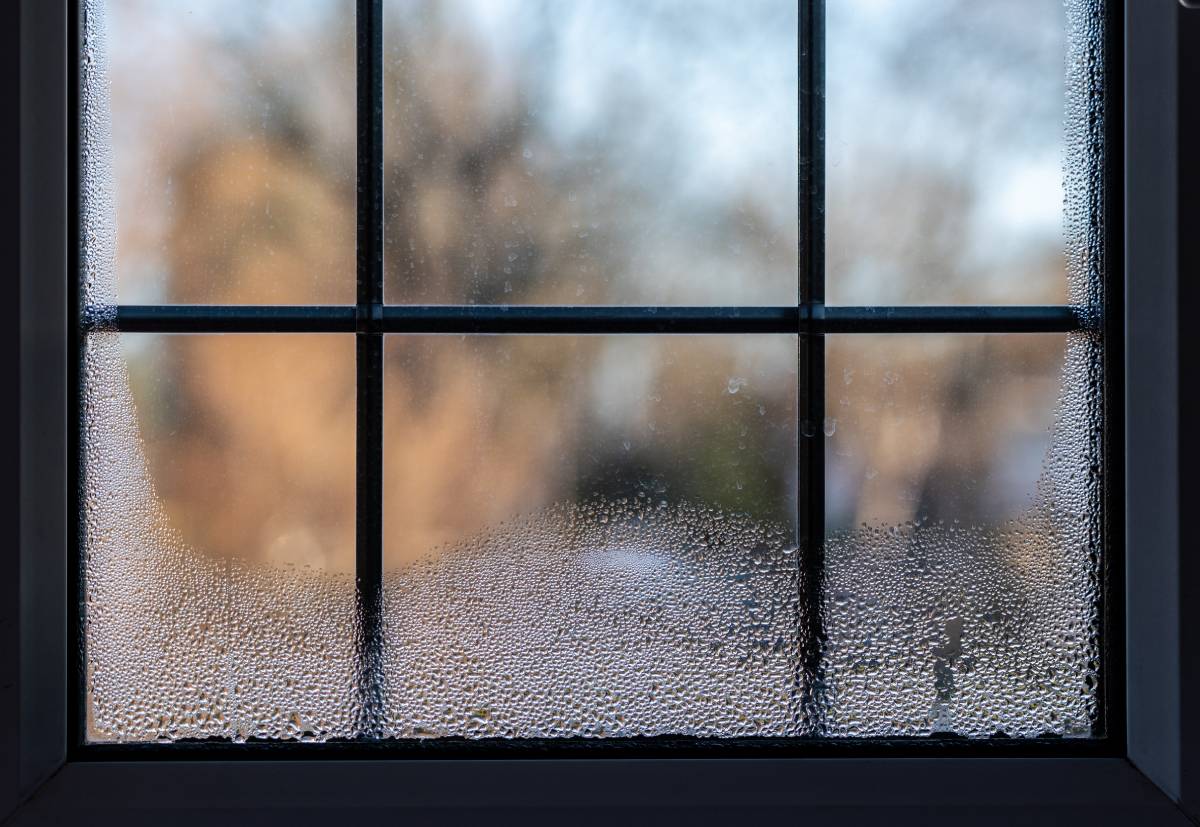
You glance at your windows one chilly morning and notice something strange: tiny drops of water clinging to the glass. You wonder, is this normal? The truth is, window condensation happens all the time, and it’s not necessarily a sign of trouble. Sometimes it’s just the air telling you something about your home’s environment.
Our team at Gilkey Windows and Exterior Solutions is here to guide you on window condensation and its potential impact on your home.
What Causes Condensation on My Windows?
The process of condensation begins with how temperature and humidity interact when the amount of moisture in warm air is greater than that in cold air. When warm, moist air touches a cold surface, such as smooth glass, it cools and releases moisture.
If you’ve ever had a cold drink sitting on a picnic table in July, you’ve seen the same thing happen—the glass “sweats” due to the temperature difference between the inside and outside.
What Does Inside Window Condensation Mean?
When water collects on the inside of your windows, it means the air inside your home is more humid than the surface of the window. Everyday activities, like cooking, showering, or even breathing, add moisture to the air.
In winter, when you keep the doors and windows shut, all that moisture stays trapped indoors, which is why the colder months can cause the formation of water beads on windows.
How to Fix Inside Window Condensation
A few small fixes might help, such as:
- Using your bathroom or kitchen exhaust fans when bathing or cooking.
- Cracking your window slightly for better airflow.
- Ensuring your blinds or curtains are open occasionally to allow warm air to circulate.
If you find condensation on your windows every morning, it could be time to check whether your home needs better ventilation, or whether your windows are insulating as well as they should.
What Does Outside Window Condensation Mean?
Seeing condensation on the outside of your windows can actually be a good thing. It means your windows are doing their job. Modern, high-efficiency windows keep your home’s indoor temperature stable.
On cool mornings, the warm, humid outside air hits that cold surface, and dew forms. This type of condensation shows your windows are well insulated and are keeping the outdoor air where it belongs on the outside. You’ll often notice this during the spring or fall, especially early in the day before the sun warms the glass.
What Does it Mean When I Have Between-the-Pane Condensation?
Now, if you notice moisture or fogging between the panes of your window, that’s a different story. This situation typically indicates that the seal on your insulated glass unit has failed. The gap between the panes, which is normally filled with air or gas for insulation, has been breached, letting moisture in. Unfortunately, once that happens, there’s no easy fix for the seal itself.
Often, between-the-pane condensation is a sign that it’s time to look into window replacement near Lexington, KY. At that stage, you’re not just dealing with foggy glass; you’re also losing energy efficiency. Windows with broken seals let heat escape in winter and creep in during summer, driving up your energy bills over time.
Find Expert and Reliable Window Replacement Near Lexington, KY
At Gilkey Windows and Exterior Solutions, we’ve been helping homeowners across Central Kentucky understand and solve window and door issues for years. Our collection of energy-efficient windows is built to handle Kentucky’s shifting seasons while keeping the look of your home aesthetically pleasing.
Contact us online or call (859) 285-6664 to find out what’s going on with your home’s window condensation. Gilkey Windows & Exterior Solutions proudly serves our local communities, including Lexington, Frankfort, Georgetown, Paris, Richmond, Versailles, Winchester, and all of Central Kentucky.